
Restaurant, cafe, & bar owners
Are your systems limiting your business from growing?
If you want help growing your profit, building systems that run the building without you & opening more locations, then this is for you.
It is a six month program where you install the TSE Operating System™, the one Alex Yanovsky used to run 735 restaurants, with your own numbers on the screen and reviewed live on every call.
For owners doing $500K a year or more · By application
What we focus on
Increase profitability
Prime costs, labour, waste, the menu, and the numbers nobody owns. Your Personalized Scaling Roadmap finds the margin that is leaking and says where to recover it, in what order.
Install management systems
The org chart, seats with outcomes, the 7-Step Management System, the daily Result, Analysis, Action report, and a meeting rhythm that teaches. The building stops depending on you.
Scale into new locations
Once the operation runs on reports, expansion is a repeatable process: the next site, the next market, the next hire, with the numbers that say the model is ready to copy.
What people are saying:
Results vary and are not typical. Outcomes depend on each owner's business, market, team and effort. We provide education and coaching, not guaranteed revenue, profit or growth.
TSE Operating System™
(here is how it works)
The CEO dashboard
This week's numbers
Week 8
| Metric | Actual | Target | Status | Owner |
|---|---|---|---|---|
| The floor | ||||
| Covers | 412 | 450 | Yellow | Dana |
| Average check | $38.20 | $40.00 | Yellow | Dana |
| The kitchen | ||||
| Food cost | 31.4% | 29.0% | Red | Marco |
| Labour | 27.8% | 28.0% | Green | Marco |
| The month | ||||
| Contribution per cover | $11.40 | $12.00 | Yellow | Priya |
| Covers to breakeven | 9,140 | 9,000 | Green | Priya |
Worked example. Your rows are your own numbers.
Step 1: Systemize Numbers
The Problem:
You know what the month did after the month is over. You can say what you took, but not what a cover earns you, what it costs to open the doors, or how many covers you need before you make a dollar. So every decision is a guess with a good story attached.
The Fix:
We start with your unit economics: contribution per cover, the nut, breakeven in dollars and in covers, and the ceiling the model puts on you. Then the metric tree, so every number on the floor hangs off the one you are trying to move.
Then we answer two questions:
- “Is it the operation or the model?” (the verdict)
- “Which number moves first?” (the worst one, with a playbook)
The Goal:
You know your ceiling and what it costs to lift it. You can name the one number you are moving this quarter and say what it is worth in dollars.
The org chart
Two locations, one structure
Worked example
The rooms come first. The names go in afterwards, and every one of them is graded on something you can point at.
Step 2: Systemize People
The Problem:
You hired managers and it did not give you your week back. The building still runs through you, because nobody was ever told in writing what they are allowed to decide, and nobody is graded on anything you could point at.
The Fix:
We draw the structure the business needs before we talk about who sits in it. A company will be a hundred years old and still have a kitchen room, a floor room, a finance room. The people in them change a hundred times.
Then every seat gets a scorecard: what this person owns, what good looks like, what gets measured weekly. Then the replacement ladder, so every key seat has somebody being trained behind it, starting with yours.
The Goal:
Every critical job has a name on it and that name is not yours. When somebody leaves you have a bench instead of a crisis.
The process map
Opening shift: the kitchen
Worked example
And the rhythm that carries it
Daily
The RAA
15 min
Weekly
Manager review
60 min
Monthly
The numbers
Half day
Quarterly
The plan
Full day
Step 3: Systemize Daily Management
The Problem:
The systems exist on paper and die in practice. Reports get written for three weeks and stop. The weekly meeting gets cancelled the week it is busy, which is the week it mattered. Nothing holds without a rhythm under it.
The Fix:
We write the shift down the way it actually runs, decisions included, and then we put a cadence around it so it keeps running:
- The daily RAA (Result, Analysis, Action), so the same numbers reach the same named people every day and somebody acts on them
- The 7-Step Management System, so a manager runs a graded loop rather than a to-do list
- The process maps, written by the manager who grades the job
- The controller, last, because it verifies everything above it
The Goal:
The restaurant runs the week you are not in it. Problems reach you after somebody has already handled them, not during. You read the numbers, you make the decisions that are genuinely yours, and the building stops waiting on you to open a door.
Is this right for you?
This is you
You are the right fit if…
- You are doing at least $500K a year and the restaurant works
- You have tried a course, a consultant, a new POS, maybe all three, and none of it changed anything
- You are still the answer to every question in the building
- You want that to change this year, not eventually
This is not you
Skip this if…
- You have not opened yet, or you are under $500K a year
- You are looking for a quick fix
- You want somebody to hand you a playbook and then disappear
- You want the work done for you rather than installed with you
What You'll Get After Joining Us:
#1: The Systems
Opening shift
The org chart
You get the exact systems I use to run my 735 restaurants. The curriculum, the playbooks, the SOPs. You don't build from scratch. You copy what already works and drop it into your business.
#2: Weekly Strategy Calls
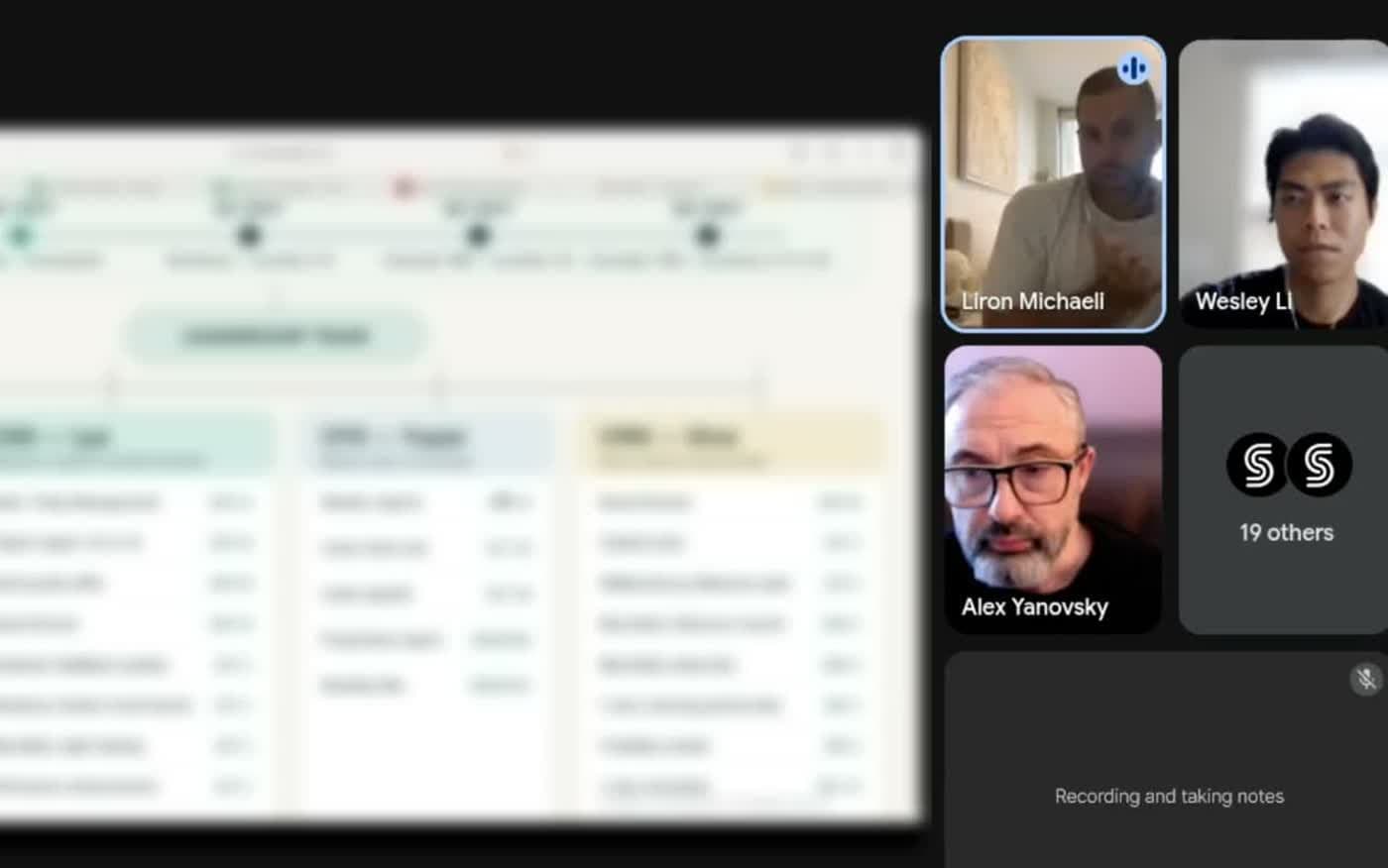
Every week you get on a live call with me and a room of other owners. I personally diagnose your business and give you a step by step roadmap for your next move.
#3: The Network
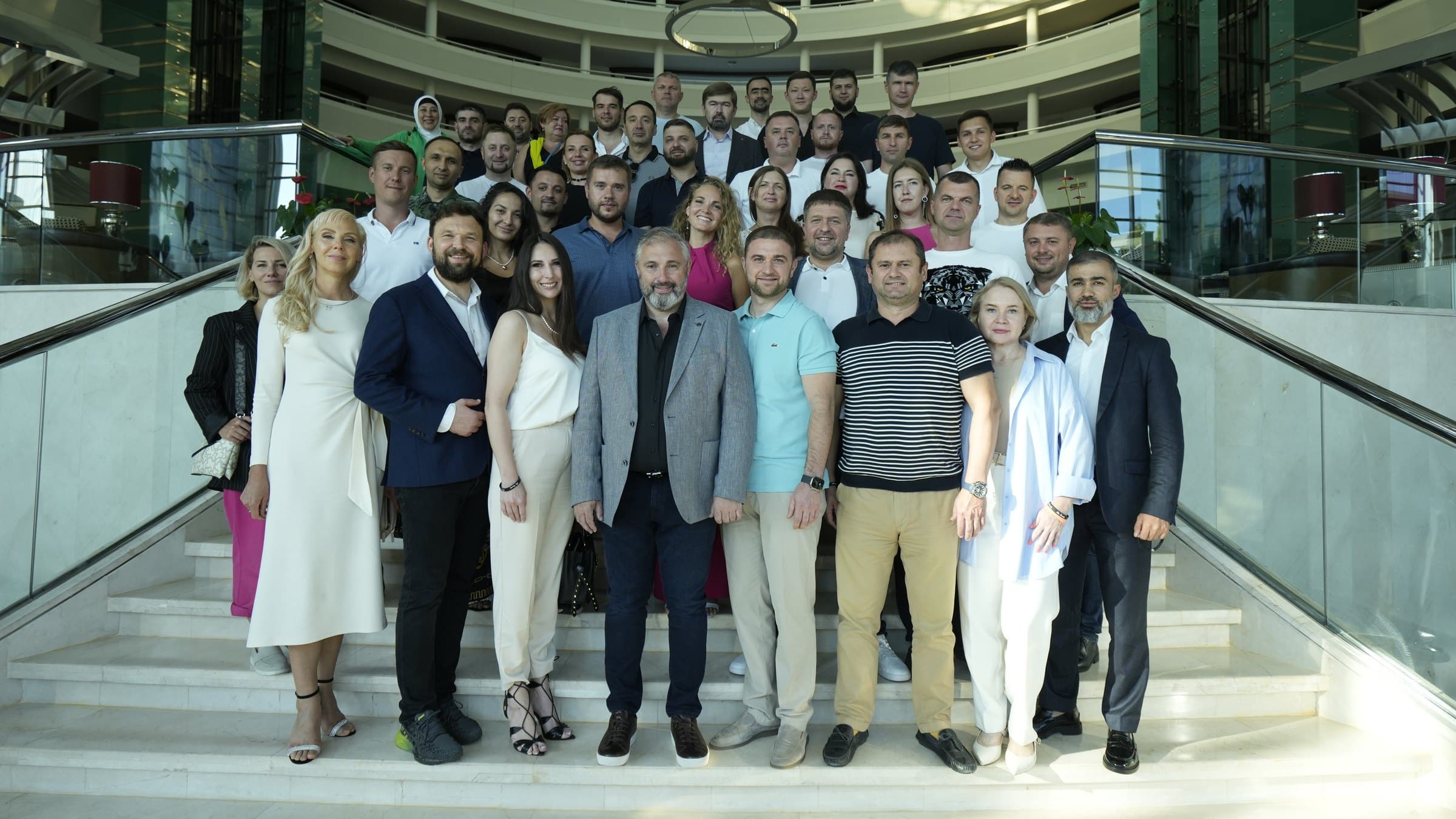
You get access to a private room of operators doing millions per year, all opening their next locations. You share what's working and grow alongside people already where you want to be.
Common questions
My business partner has to agree to this. How does that work?
Bring them to the call. This is the single most common reason an owner does not decide on the spot, and it is a fair one: nobody should commit their business to six months of work their partner has not heard described.
So we would rather have both of you on the same call than have you relay it. Partners ask different questions than owners do, usually about money and about who is going to cover the floor while this is being built, and those answers land better first hand. If your partner is in the kitchen right now, book a time when they are not.
Is now the right time, or should I wait?
It depends what you are waiting for. If you are waiting on a lease, a build out, or a decision about the next location, that is usually an argument for starting sooner. Whatever management you have today is what the next location will inherit, and fixing it across two sites costs more than fixing it across one.
If you are waiting on a number, a year end, or a system you are mid way through installing, say so on the call and we will tell you honestly whether to start now or in a month. We have told owners to wait before.
If you are waiting for the business to calm down, that is the thing the Accelerator is for. It does not calm down on its own.
Can I try this on my own first?
Yes, and there is a real way to do it. Management OS is $97 and gets a daily management cadence running with the team you already have. If you want to see whether this way of running a restaurant suits you before committing to the full installation, start there.
What most owners find is that the $97 product tells them what to do and the Accelerator is what gets it done, because the hard part is not the information. It is doing the work in the right order while somebody checks it.
What does it cost?
The Restaurant Accelerator is $12,000 for six months, paid in full, or six monthly payments of $2,500. Paying in full saves $3,000.
If the number is the problem rather than the timing, tell us on the call. Sometimes the honest answer is that the business is not yet big enough for this to pay for itself, and we will say so.
Is my restaurant the right size for this?
The Accelerator is built for $500K to $5M a year. That is usually one or two locations, with the owner still close enough to the floor that the business stops when they do.
Under $500K, start with Management OS at $97. The Accelerator assumes there is enough business underneath it for systems to be worth installing, and enough margin that $12,000 comes back. Your roadmap will also tell you something uncomfortable if it applies: some restaurants have an operations problem and some have a business model problem, and no amount of management fixes the second kind.
Over $5M you are past this program. At that size there is normally a leadership team already, and the F&B Founders Board is the better room.
Can I see the program and the terms before I decide?
Yes, and you should. After the call we send four things: a written breakdown of the six months and every deliverable, a recording of a real group coaching session so you can hear the level of the conversation, the long interview with Alex so you know whose judgment you are buying, and client interviews.
Read them, then decide. Nobody is asked to commit to $12,000 off a single conversation.
Do you guarantee results?
No, and we will not pretend otherwise. We guarantee the work is defined, the sessions are live, and the artifacts get reviewed by someone who has run 735 locations.
What the business does with them depends on your market, your team, and how much of the implementation actually gets done. Owners who install get results. Owners who watch do not.
What do I actually walk away with?
Weekly strategy calls with Alex, all recorded. Your Personalized Scaling Roadmap, built from where your restaurant is today. Five courses and 39 lessons, in order: Management OS, Maximize Profit, Know Your Numbers, Get More Customers and Open More Locations. Your own client portal.
Plus four bonuses: the Playbook Library of 15 playbooks, workbooks, tools and 27 SOPs, the Wayer software for finance, inventory, scheduling and tasks, and AskWayer, your AI coach between calls.
How much time does it take each week?
One live strategy call with Alex, plus the lessons and the work between calls. The work is the point: every week ends with something built, and the weeks where nothing gets built are the weeks that do not compound.
Should my managers be on the calls?
Yes, once the management system goes in. The org chart, the scoring system, the daily reports and the 7-Step Management System are all installed with the people who will run them. Owners who bring their managers move faster, because the system is being taught to the people who have to live in it.
Is it live, or recorded?
Live, with Alex and other owners, every week. The lessons and the calls are recorded and stay available, but the calls themselves are live because the work gets reviewed on them. You bring your numbers and your documents and they get looked at.
What happens after the six months?
You decide whether to keep going with us. If you stop, access to the program and to Wayer ends, and your Wayer data is kept. Owners who are at $5M or heading there are the ones we invite to the F&B Founders Board.
Nobody is required to continue. The system you built is yours either way.